



Unbottling the Truth: The hidden health and environmental costs of:
Star-hotel drinking water systems
The hidden conflict in your hotel rooms
You check into any star or premium hotel room in India, and you are greeted by an environment of absolute comfort. From the plush, high-thread-count linens to the climate-controlled air and ambient lighting, every element of the room is designed to pamper you. Somewhere on the study desk or the minibar counter, you will inevitably find two complimentary bottles of drinking water. For the modern traveler, this is an expected amenity, a baseline standard of hospitality hygiene. We open the seal, drink to quench thirst and think nothing more of it.
However, beneath this luxury provision of sealed water bottle lies a hidden conflict. The drinking water systems deployed across the vast landscape of Indian classified star hotels are locked in a quiet, double-edged crisis. On one side, stands a terrifying environmental hazard: millions of single-use plastic bottles entering the waste stream daily. On the other side, silently stands a biological threat: highly filtered water that has been entirely devoid of its life-sustaining essential minerals, serving the travelers nothing more than a dead water. Through this write up it is tried to raise an awareness regarding what we are consuming during our hotel stay and how the hospitality ecosystem must change towards the basic provision of good drinking water as we are being charged a big amount for our stay.
To understand the distribution of drinking water types across officially classified star hotels in India, we must look at how hotels align with the Ministry of Tourism’s NIDHI+ portal guidelines alongside sustainability directives from the FSSAI and State Pollution Control Boards. The baseline infrastructure is built upon approximately 1,637 officially classified star hotels (ranging from 1-star to 5-star Deluxe) registered in the national database. As the water distribution is dictated by hotel star categories, the baseline split among these properties operates according to the following framework:
Star-Wise hotel Classification Breakdown with numbers
| Star Category | Sub-Category | Number of Certified Hotels |
|---|---|---|
| 5-Star Deluxe | Ultra-Luxury | 174 |
| 5-Star (With Alcohol) | Premium Full-Service | 600 |
| 5-Star (Without Alcohol) | Premium Full-Service. Dry | 57 |
| 4-Star (With Alcohol) | Mid-Scale Premium Properties | 214 |
| 4-Star (Without Alcohol) | Mid-Scale Premium Dry | 144 |
| 3-Star | Mid-segment | 409 |
| 2-Star | Standard Budget Economy | 23 |
| 1-Star | Basic Tourist Economy | 16 |
| Total Certified Star Hotels in India 1,637 as on date. | (source NIDHI +) | |
Classified star hotels with Drinking water system in the rooms
5-Star & 5-Star Deluxe hotels: Represent roughly 47% of all classified hotels (831). This segment has largely shifted to Sustainable glass-bottled RO plants due to brand ESG mandates and premium zero-plastic positioning. Even today not few of the 5star hotels are using the packaged drinking water in plastic bottles.
1-Star to 4-Star Properties: Represent roughly 53% of classified hotels (806). This segment primarily relies on commercial, standard plastic-packaged drinking water due to limited budget or infrastructure to install automated in-house glass bottling setups.
Decoding the present three types of hotel drinking water systems in rooms from environment & health point of view.
To understand the scale of this issue, a regular consumer must first understand how water is generally categorized and served inside star hotels. Across India's classified hotels (ranging from 1-star budget properties up to ultra-luxury 5-star deluxe & heritages), the drinking water foot-print is fundamentally split into three distinct models.
Three Hotel Drinking-Water Models
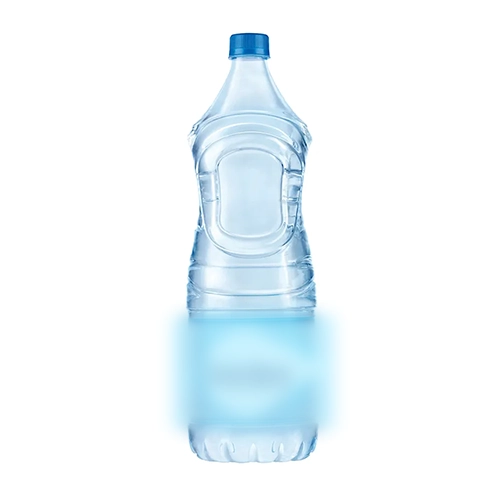
Packaged drinking water in PET plastic bottles
This remains majorly the baseline standard across the vast majority of 3-star and 4-star establishments, and even in many entry-level 5-star properties. These are mass-manufactured, commercially sealed bottles from well-known industrial brands. The primary appeal of this tier is absolute psychological safety. Guests look at a sealed plastic cap and instantly feel secure that the water inside is free from local pathogens and contaminants. For the hotel administration, it represents an effortless, outsourced solution to drinking water, a cheap source to purchase in bulk, incredibly easy to distribute.
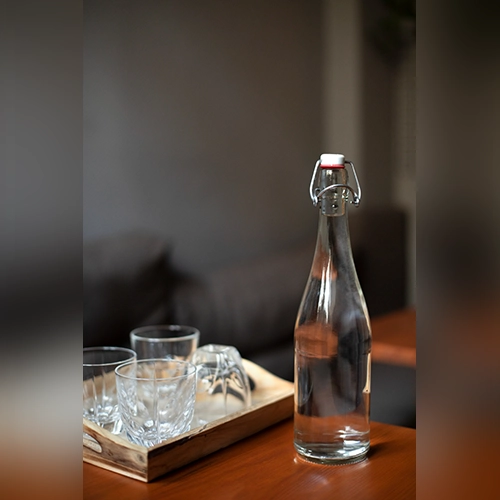
Reverse osmosis (RO) water in reusable glass bottles
In response to growing environmental scrutiny and corporate sustainability mandates, a highly visible, progressive shift is underway. Many prominent 4-star,5-star & 5-star Deluxe hotel chains & standalone hotels have proudly implemented 'in-house bottling plants. Under this Eco-conscious framework, the hotel draws local municipal or ground water, subjects it to multi-stage Reverse Osmosis (RO) filtration, and fills it directly into sterilized glass bottles. These bottles are sealed with customized caps or stickers and placed in rooms with taglines like 'Clean water for a clean planet.' The immediate and notable victory of this type of water is the complete eradication of single-use plastic trash from the hotel rooms only.
Natural Source mineral water in plastic or glass bottles
This is at the apex of water luxury & quality, yet remains an exceedingly rare exception rather than the norm. Found almost exclusively in high-end boutique retreats, premium international luxury suites, and ultra-exclusive heritage properties, this water is sourced directly from natural, mineral-rich underground springs or protected glacial aquifers. It is bottled directly at the source into premium glass packaging, keeping its native mineral composition completely intact. While it delivers the gold standard for both environmental protection and biological health, its prohibitive retail cost makes it economically unfeasible for mass distribution across ordinary hospitality chains. Another type of qualitative drinking water is also available in the market but it is rare. This is the atmospheric water. The ambient humidity is converted into the mineral water without using the municipal or borewell source. This quality water is most sustainable in India so far.
Let’s see few challenges of the different types of the waters systems practiced in the classified star hotels in India
Hidden menace of plastic:
The downstream destruction of single-use bottles For decades, convenience has acted as a shield for environmental damage. The sheer volume of plastic waste generated by the Indian hotel sector is staggering when broken down into simple and real-world numbers. The micro-scale avalanche: Consider a hotel with 200 operational rooms. On an average day of healthy occupancy, if every room consumes just two standard 1-litre or four 500ml plastic bottles, that single hotel generates roughly 400 empty plastic bottles every single day. Over the course of a single calendar year, that lone hotel discards nearly 150,000 plastic bottles. Multiply this metric across thousands of classified star hotels dotting India's tier-1 cities, tourist hot spots, and business hubs, and you realize we are looking at tens of millions of plastic bottles discarded every single year by a single industry.
The Recycling Myth:
A common defense mechanism is that plastic bottles are 'recyclable' and therefore acceptable if used in bulk. This is a comforting myth. In reality, the domestic waste infrastructure in India struggles to cope with the sheer volume of municipal waste. A massive percentage of these single-use PET bottles never see a modern recycling plant. Instead, they are down cycled into lower-grade materials, dumped directly into overburdened landfills where they take up to hundreds of years to degrade, or find their way into local rivers & drains, choking drainage systems and ultimately polluting the surrounding social and marine ecology.
Chemical Leaching & Micro-plastics:
The threat of the plastic bottle is not just ecological; it is directly physiological. India is a country of extreme climatic conditions, with summer temperatures routinely crossing 40 degrees Celsius. Packaged plastic bottles are frequently transported in open, non-refrigerated commercial trucks and stored in uncooled warehouses for weeks before reaching a hotel room. When PET plastic is exposed to sustained heat, it undergoes a process called chemical leaching. Harmful synthetic compounds slowly bleed from the plastic matrix into the drinking water which the hotel guests are unaware off.
The RO water trap: Quenched thirst but starved health:
As the public grows increasingly aware of the plastic menace, the shift toward in-house RO filtration in glass bottles is cheered as a flawless win. However, this is where a second, far more insidious crisis emerges. In our quest to purify water, we have inadvertently stripped it of its biological value.
The Blind filtration process: To make water safe from India's complex groundwater pollutants (such as heavy metals, nitrates, high total dissolved solids, and microbial activity), hotels heavily rely on Reverse Osmosis. An RO membrane is a hyper-fine, microscopic sieve. It forces water under pressure through the pores so incredibly that everything dissolved in the water is mechanically blocked. While this flawlessly removes harmful toxins, it acts like a blind filter which cannot differentiate between a toxic lead molecule and a vital magnesium ion. Consequently, the process strips out 90% to 99% of the water's natural, life-sustaining minerals.
The anatomic reality of 'Dead Water': What remains after intense RO filtration is what nutritionists refer to as 'demineralize or 'dead' water. From a purely aesthetic and visual standpoint, the water is crystal clear, odorless, and perfectly crisp. It completely satisfies the basic sensation of oral thirst. However, at a microscopic, level, this water is empty. It contains virtually zero traces of two of the most critical elements required by the human body: Calcium and Magnesium. Human physiology is beautifully balanced. When you drink water devoid of dissolved minerals, the water does not nourish the human health rather this water causes few health issues in long term if drunk for a prolonged period. The sheer irony of this state cannot be overstated, a traveler pays premium tariff rates to secure a luxury hospitality experience, only to be served drinking water that leads to a biological deficit to the physical health.
Possible Solutions: Navigating the Path to Conscious Hydration-
The current practice is unsustainable, but the path forward does not require hotels to abandon hygiene or revert to plastic bottles. Systematic, achievable changes can bridge the gap between safety, ecology, and human nutrition.
In-House re-mineralisation Standards: The absolute best technical resolution for the hospitality sector is the mandatory installation of re-mineralisation cartridges at the tail end of all in-house RO bottling systems. These specialized cartridges pass the freshly stripped RO water through a controlled bed of crushed, food-grade natural mineral rocks. This process re-introduces optimal, balanced quantities of copper, calcium, magnesium, and alkaline ions back into the stream before it enters the glass bottles. This single upgrade ensures the water is completely free of micro plastics, free of local pathogens, environmentally flawless, and physically rejuvenating.
Regulatory Overhauls in Star Classification: The Ministry of Tourism, through its Hotel Stars Classification Scheme (HRACC), holds immense regulatory power. India should update its star classification criteria to actively penalize single-use plastics while rewarding points for water mineral integrity. A hotel should not be eligible for a 5-star or 5-star deluxe rating unless it can independently demonstrate that its guest-room drinking water complies with dual standards: zero single-use plastic containers and a healthy, verified mineral profile (Total Dissolved Solids maintained in a balanced, healthy range of 150-300 mg/L). Further the FSSAI along with the BIS can enforce certain enforceable standards in drinking water in the classified star hotels.
The Conscious traveler manifesto: Until corporate systems change universally, the common consumer must step up as an active stakeholder. When checking into a hotel, make it a habit to look at your water. If you see plastic bottles, politely express your environmental concern to the front desk. If you see glass bottles filled with in-house RO water, ask the guest relations team if the water has been actively remineralised. Carry a reusable, high-grade stainless steel or copper thermal flask during your travels, and utilize verified mineral water dispensing stations whenever available.
Conclusion: The Real meaning of luxury in drinking water
True luxury cannot be measured solely by the size of a television screen, the thickness of a bedroom carpet, the complexity of a marble bathroom layout or of high quality of bedsheets etc. True luxury, in its most authentic and progressive definition, must encompass a deep respect for both global ecological systems and the immediate physical health of the human body.
The Indian hospitality industry stands at a historical crossroads. By abandoning single-use plastic bottles, it has shown that it is capable of radical, swift operational transformation. Now, it must take the final, crucial step: ensuring that the sustainable alternatives it offers do not compromise human health. As consumers, travelers, and citizens, our collective voice and daily choices are the ultimate catalysts that will drive this vital shift toward a truly healthy, plastic-free, and mineral-rich future. This information should be inculcated through the environmental education to the young citizens of this country so that the young mass can advocate for the environmental protection and sustainability leading to good health of the society.